Total Pageviews

Sunday, May 19, 2013

Charter schools counsel out poor performing students.

Don't think for a second that the same thing doesn't happen here. -cpg

From WSMV.co by Dennis Ferrier
Leaders with Metro Nashville Public Schoolshave serious concerns about what is happening at some of the city's most popular charter schools.
Students are leaving in large numbers at a particularly important time of the school year, and the consequences may have an impact on test scores.
Charter schools are literally built on the idea that they will outperform public, zoned schools. They are popular because they promise and deliver results, but some new numbers are raising big questions about charter schools.
One of the first things a visitor sees when stepping into Kipp Academy is a graph that shows how Kipp is outperforming Metro schools in every subject.
However, Kipp Academy is also one of the leaders in another stat that is not something to crow about.
When it comes to the net loss of students this year, charter schools are the top eight losers of students.
In fact, the only schools that have net losses of 10 to 33 percent are charter schools.
"We look at that attrition. We keep an eye on it, and we actually think about how we can bring that back in line with where we've been historically," said Kipp Principal Randy Dowell.
Dowell said Kipp's 18 percent attrition is unacceptable.
MNPS feels it's unacceptable as well, because not only are they getting kids from charter schools, but they are also getting troubled kids and then getting them right before testing time.
"That's also a frustration for the zoned-school principals. They are getting clearly challenging kids back in their schools just prior to accountability testing," said MNPS Chief Operating Officer Fred Carr.
Nineteen of the last 20 children to leave Kipp Academy had multiple out-of-school suspensions. Eleven of the 19 are classified as special needs, and all of them took their TCAPs at Metro zoned schools, so their scores won't count against Kipp.
"We won't know how they perform until we receive results and we see. We would be happy to take their results, frankly. The goal is getting kids ready for college. The goal is not having shiny results for me or for anyone on the team," Dowell said.
Kipp Academy has started new counseling groups to try to retain children. MNPS said it constantly sees charters being held up as the model, but feels these numbers prove the two different types of schools play by different rules.

Al Roker joins the anti-teacher bandwagon

It's a slow news day and I just saw it again on TV. -cpg

NBC has those, The More You Know segments, Al Roker says what the country needs is more good teachers. I reject the epidemic of bad teachers narrative. The real problem with teachers is they don’t have a magic wand, or magic beans or fairy dust, because that is what it will take for many to be truly be successful as they are saddled with bad policies and a lack of resources, doing their best with children who don’t come from much. Instead of demonizing them for not being able to completely overcome the dehibilitating effects of poverty, we should get on our knees and thank them because their students would undoubtedly be much worse off with out them. Its poverty Al, not a lack of good teachers that is holding us back.

Shame on you Al Roker, you just pooped your pants again.

Teacher says, I quit!

To All it May Concern:

I’m doing something I thought I would never do—something that will make me a statistic and a caricature of the times. Some will support me, some will shake their heads and smirk condescendingly—and others will try to convince me that I’m part of the problem. Perhaps they’re right, but I don’t think so. All I know is that I’ve hit a wall, and in order to preserve my sanity, my family, and the forward movement of our lives, I have no other choice.

Before I go too much into my choice, I must say that I have the advantages and disadvantages of differentiated experience under my belt. I have seen the other side, where the grass was greener, and I unknowingly jumped the fence to where the foliage is either so tangled and dense that I can’t make sense of it, or the grass is wilted and dying (with no true custodian of its health). Are you lost? I’m talking about public K-12 education in North Carolina. I’m talking about my history as a successful teacher and leader in two states before moving here out of desperation.

In New Mexico, I led a team of underpaid teachers who were passionate about their jobs and who did amazing things. We were happy because our students were well-behaved, our community was supportive, and our jobs afforded us the luxuries of time, respect, and visionary leadership. Our district was huge, but we got things done because we were a team. I moved to Oregon because I was offered a fantastic job with a higher salary, a great math program, and superior benefits for my family. Again, I was given the autonomy I dreamed of, and I used it to find new and risky ways to introduce technology into the math curriculum. My peers looked forward to learning from me, the community gave me a lot of money to get my projects off the ground, and my students were amazing.

Then, the bottom fell out. I don’t know who to blame for the budget crisis in Oregon, but I know it decimated the educational coffers. I lost my job only due to my lack of seniority. I was devastated. My students and their parents were angry and sad. I told myself I would hang in there, find a temporary job, and wait for the recall. Neither the temporary job nor the recall happened. I tried very hard to keep my family in Oregon—applying for jobs in every district, college, private school, and even Toys R Us. Nothing happened after over 300 applications and 2 interviews.

The Internet told me that the West Coast was not hiring teachers anymore, but the East Coast was the go-to place. Charlotte, North Carolina couldn’t keep up with the demand! I applied with three schools, got three phone interviews, and was even hired over the phone. My very supportive and adventurous family and I packed quickly and moved across the country, just so I could keep teaching.

I had come from two very successful and fun teaching jobs to a new state where everything was different. During my orientation, I noticed immediately that these people weren’t happy to see us; they were much more interested in making sure we knew their rules. It was a one-hour lecture about what happens when teachers mess up. I had a bad feeling about teaching here from the start; but, we were here and we had to make the best of it.

Union County seemed to be the answer to all of my problems. The rumors and the press made it sound like UCPS was the place to be progressive, risky, and happy. So I transferred from CMS to UCPS. They made me feel more welcome, but it was still a mistake to come here.

Let me cut to the chase: I quit. I am resigning my position as a teacher in the state of North Carolina—permanently. I am quitting without notice (taking advantage of the “at will” employment policies of this state). I am quitting without remorse and without second thoughts. I quit. I quit. I quit!

Why?

Because…

I refuse to be led by a top-down hierarchy that is completely detached from the classrooms for which it is supposed to be responsible.

I will not spend another day under the expectations that I prepare every student for the increasing numbers of meaningless tests.

I refuse to be an unpaid administrator of field tests that take advantage of children for the sake of profit.

I will not spend another day wishing I had some time to plan my fantastic lessons because administration comes up with new and inventive ways to steal that time, under the guise of PLC [Professional Learning Community] meetings or whatever. I’ve seen successful PLC development. It doesn’t look like this.

I will not spend another day wondering what menial, administrative task I will hear that I forgot to do next. I’m far enough behind in my own work.

I will not spend another day wondering how I can have classes that are full inclusion, and where 50% of my students have IEPs, yet I’m given no support.

I will not spend another day in a district where my coworkers are both on autopilot and in survival mode. Misery loves company, but I will not be that company.

I refuse to subject students to every ridiculous standardized test that the state and/or district thinks is important. I refuse to have my higher-level and deep thinking lessons disrupted by meaningless assessments (like the EXPLORE test) that do little more than increase stress among children and teachers, and attempt to guide young adolescents into narrow choices.

I totally object and refuse to have my performance as an educator rely on “Standard 6.” It is unfair, biased, and does not reflect anything about the teaching practices of proven educators.

I refuse to hear again that it’s more important that I serve as a test administrator than a leader of my peers.

I refuse to watch my students being treated like prisoners. There are other ways. It’s a shame that we don’t have the vision to seek out those alternatives.

I refuse to watch my coworkers being treated like untrustworthy slackers through the overbearing policies of this state, although they are the hardest working and most overloaded people I know.

I refuse to watch my family struggle financially as I work in a job to which I have invested 6 long years of my life in preparation. I have a graduate degree and a track record of strong success, yet I’m paid less than many two-year degree holders. And forget benefits—they are effectively nonexistent for teachers in North Carolina.

I refuse to watch my district’s leadership tell us about the bad news and horrific changes coming towards us, then watch them shrug incompetently, and then tell us to work harder.

I refuse to listen to our highly regarded superintendent telling us that the charter school movement is at our doorstep (with a soon-to-be-elected governor in full support) and tell us not to worry about it, because we are applying for a grant from Race to the Top. There is no consistency here; there is no leadership here.

I refuse to watch my students slouch under the weight of a system that expects them to perform well on EOG [end of grade] tests, which do not measure their abilities other than memorization and application and therefore do not measure their readiness for the next grade level—much less life, career, or college.

I’m tired of watching my students produce amazing things, which show their true understanding of 21st century skills, only to see their looks of disappointment when they don’t meet the arbitrary expectations of low-level state and district tests that do not assess their skills.

I refuse to hear any more about how important it is to differentiate our instruction as we prepare our kids for tests that are anything but differentiated. This negates our hard work and makes us look bad.

I am tired of hearing about the miracles my peers are expected to perform, and watching the districts do next to nothing to support or develop them. I haven’t seen real professional development in either district since I got here. The development sessions I have seen are sloppy, shallow, and have no real means of evaluation or accountability.

I’m tired of my increasing and troublesome physical symptoms that come from all this frustration, stress, and sadness.

Finally, I’m tired of watching parents being tricked into believing that their children are being prepared for the complex world ahead, especially since their children’s teachers are being cowed into meeting expectations and standards that are not conducive to their children’s futures.

I’m truly angry that parents put so much stress, fear, and anticipation into their kids’ heads in preparation for the EOG tests and the new MSLs—neither of which are consequential to their future needs. As a parent of a high school student in Union County, I’m dismayed at the education that my child receives, as her teachers frantically prepare her for more tests. My toddler will not attend a North Carolina public school. I will do whatever it takes to keep that from happening.

I quit because I’m tired [of] being part of the problem. It’s killing me and it’s not doing anyone else any good. Farewell.

CC: Dr. Mary Ellis
Dr. June Atkinson

Friday, May 17, 2013

Superintendent Vitti changes his tune on the teacher academy; goes from mandatory to if you miss it there won’t be retribution.

The first letter to teachers read: All of this, and more, will be shared with you in detail at the 2013-2014 Teacher Academy this summer. You will have a choice of attending one of two weeks: the week of July 29th, or the week of August 5th. For those who miss both weeks, you will be expected to make-up the 5 days during the first semester of school by participating in five Saturday sessions.

A few hours later after I am sure a few inquiries from the union we got this:  As a follow up to the email below, please be advised that attendance at the Teacher Academy is strongly encouraged, but not required. Participation, or lack thereof, will not be factored into your evaluation. We strongly encourage you to attend one of the sessions and look forward to seeing you there.

Another change was point’s teachers would get for attending. The union initially said: No, you will not get your daily rate because this is not mandatory. No points will be offered.

But the latest e-mail form the super said: You will earn Master Plan points for participating in the Academy, and while participation is not required, it is strongly encouraged.

If your head is now spinning yours isn’t the only one.

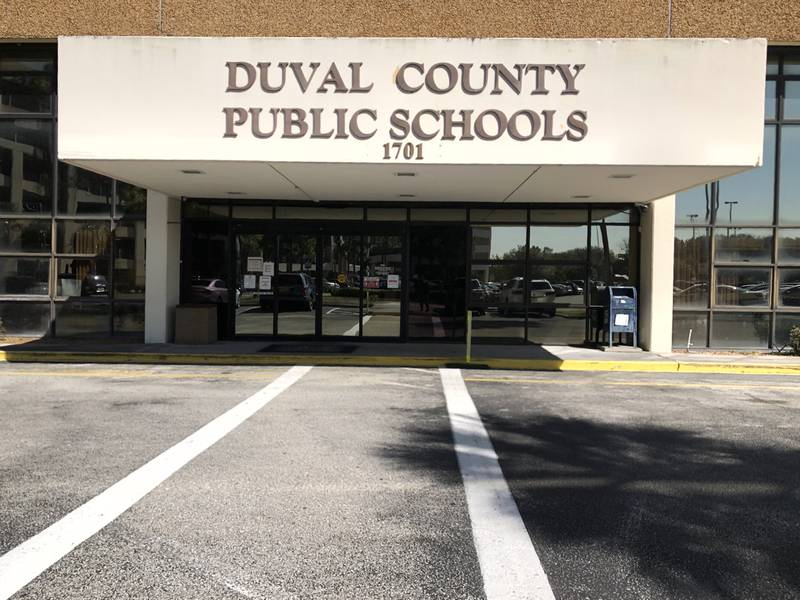
Welcome to Duval County

School Board member Becki Couch late to the party again!

The super announced he wants to get rid of grade recovery. For years I have been writing about how some students game the system and making it available to all of them regardless of behavior and effort has handicapped student accountability.

I thought the best plan was to reserve grade recovery for these students who legitimately missed a lot of classes or for students who came consistently, behaved and tried hard but just needed a little more. To be honest though I am not so worried about the later group because teachers have a way of making sure those students have the opportunity to pass.

This is where Mrs. Couch comes in. She said in a Times Union article, “This has been a complaint for a very long time, even back when I was [teaching] in the classroom,”


Um, Mrs. Couch you have been on the board going on three years now. If you knew it was a problem, even from way back when you were in the classroom (3 years ago) maybe you could have done or said something. Maybe you could have fought for a change. I am confused what are we paying you for? Were there any other problems, like discipline, administrators acting like bullies, a one size fits all curriculum, that maybe we should address? SHEESH!

I was very optimistic when Couch was elected but the truth is she has been hit or miss.

Read more at Jacksonville.com: http://jacksonville.com/news/metro/2013-05-16/story/duval-superintendent-wants-do-away-grade-recovery-program#ixzz2TaxzlQSj

Wednesday, May 15, 2013

Duval County asks its teachers to take it on the chin

Here are the facts. Once again members of the school board received a 2800 dollar raise. They went from making what a first year teacher makes to making what a 9th year teacher makes. Also a teacher would have to work 20 years to see that kind of raise.

Next the super wants to pay teachers a stipend well below their normal hourly rate to attend a week long teacher’s academy.

Finally the board wants to sit on 3 times the reserves it is required to or an additional 50 million dollars.

My question is why are teachers most of whom already spend a lot of their own money on their students and classrooms and who when compared to teachers nationally are grossly underpaid supposed to take it on the chin?

This is absolutely disrespectful.

Is Superintendent Vitti trying to pull a fast one on the district’s teachers?

This is part of a note we got from the superintendent about the summer teacher academy:

All of this, and more, will be shared with you in detail at the 2013-2014 Teacher Academy this summer. You will have a choice of attending one of two weeks: the week of July 29th, or the week of August 5th. For those who miss both weeks, you will be expected to make-up the 5 days during the first semester of school by participating in five Saturday sessions.

Nowhere does it say the academy is optional in fact it says, skip only if you are willing to give up 5 Saturdays in the fall. Nowhere does it say you have the choice of not attending.

Now it does say we will get paid a stipend, 75 dollars a day but if a teacher works a full day that is far below their rate.

The union however says the academy is optional: No, you will not get your daily rate because this is not mandatory. No points will be offered.

Points are what teachers use to recertify and we get them through trainings and or taking classes.

The district is trying to get away with training on the cheap. If you aren’t going to pay me my rate give me some points. If you aren’t going to give me some points pay me my rate but either way don’t present what is optional or mandatory. That’s insulting; it says teachers aren’t smart enough to tell the difference.

As you can imagine this was quite the topic around the water cooler. One teacher who has been through more rounds of training than she can count said, and the really sad thing is whatever they “teach” us will be out the window in a few months or a year or two at most, just like every other training they have given us.

Since the district at best is trying to train its teachers on the cheap or at worse trying to pull a fast one, I couldn’t really disagree with her.

Duval County sells out its teachers and students

Next year Duval County will continue its partnership with Teach for America despite the fact everybody admits this is the wrong thing to do. Trey Czar who will manage 11 million dollars to help train the TFA recruits said on the radio two weeks ago that first and second year teachers struggle and the districts own study said we have a disproportionate amount of rookie teachers in our struggling schools. Well TFA assure that we have a constant rotation of struggling, neophyte teachers in our struggling schools!

So what does Duval do? Read that first sentence again, it continues with its plans to employ these hobbyists who will be work with our most vulnerable children.

Oh and it gets worse, despite the fact Duval has a hard time retaining teachers it doubles down on a program where it knows that the vast majority of will leave after their two year commitment. Less than 25% of the first three classes have stayed to year 3.

How does any of this make sense? We should be cutting back not expanding. It’s ridiculous and it’s also offensive to veteran teachers who have made teaching a career rather than an extended summer job which is what it is to the vast amount of TFA recruits.

It also wastes money as many will get training on the districts dime that they will never use. Then their mere presence has pay, cost of benefits and pension ramifications for teachers.

How can we reach our potential when we insist of staffing our classes with rookie teachers who won’t stay long enough to get better instead of teachers who may become lifelong educators? The answer we can’t but that hasn’t stopped the powers that be from moving ahead.

Why is the Duval County School Board insisting we keep triple the amount in reserves?

First let me remind you that several school board members received a 2800 dollar raise. A teacher would have to work 20 years before they got a raise approaching that much.

From the Times Union: After asking for revisions on capital dollars and charter school money, board members then decided they wanted to see the rough draft with 9 percent of the general revenue placed in the district’s reserve fund.

State law requires that the school district tuck away 3 percent in the reserve fund, which would mean $24.7 million for 2013-14. At 9 percent, that number is around $75 million.

Why are we leaving 50 million on the sidelines again? How about throwing some of that to the district’s teachers and staff who haven’t received raises in years? If huge raises are okay for the school board shouldn’t at least little raises be okay for the teachers and staff too?

The reality is there are lots of needs in the district that are going unmet. Last I counted there were just 12 social workers for all 123,000 kids, many teachers have to pay for their own supplies and should we really have 50 kids in art classes or 60 or more in P.E.?

The school board seems to think so.

Read more at Jacksonville.com: http://jacksonville.com/news/metro/2013-05-14/story/duval-schools-budget-workshop-confused-board-members#ixzz2TNY4A3Nf

Despite 91 million dollars charter school advocates plead poverty.

In a recent piece on ReDefinedEd Sherri Ackerman, who has never met a charter school that performed poorly or a public school that didn’t, complained about the lack of resources that charter schools have. She mentioned that many lacked gyms and kitchens and computer labs and so much more but she never mentioned that many are profit centers for hedge fund managers and corporations. Hmm, I wonder if they would have those things if instead of fattening executive’s bank accounts they invested that money into the schools. So much for it being all about the children right?

I for one am tired of the pleas of poverty and their demands for a continuing revenue stream. They got 91 million dollars this year and 50-something million last year. That money would have been better served in schools with gyms and kitchens and computer labs and proper facilities, let alone certified teachers and a curriculum.

Then nobody forces corporations to open charter schools. Nobody holds a gun to their heads and demands it. It’s all voluntary and if these people don’t know what they are getting into then they shouldn’t be getting into it. That should be alarming too.

This is just one more attempt to divert the public’s money away from where it is desperately needed and it is appalling

. http://www.redefinedonline.org/2013/05/charter-schools-dont-look-like-the-taj-mahal/

Tuesday, May 14, 2013

House members say yes to cheap health insurance — for themselves.

What does this have to do with education? Well these are the same legislators who are voting for vouchers, charter schools, merit pay, odious evaluations, erosion of teachers rights and an expansion of high stakes testing. Then they vote to turn down healthcare for the poor while charging themselves less than 9 bucks a month. These people don't care about anything but their own private interests and many are trying to make a buck off education and save a buck, lots of bucks off of health care. -cpg

From the Tampa Times by Tia Mitchel

Florida House Republicans last month loudly and proudly rejected billions of dollars in federal money that would have provided health insurance to 1 million poor Floridians.
Quietly, they kept their own health insurance premiums staggeringly low. House members will pay just $8.34 a month for state-subsidized health care next year, or $30 a month to cover their entire family.
House Republicans, including Speaker Will Weatherford, R-Wesley Chapel, would not say why the House did not raise its premiums to match the Senate. The premium increase was also part of Gov. Rick Scott's proposed budget.It's also less than the $25 a month House Republicans wanted to charge poor Floridians for basic coverage such as a limited number of doctor visits or preventive care.
In a statement Monday, Weatherford said: "We are aware of the differences in what House members pay compared to other state employees for health insurance and are looking forward to addressing it next session."
The discrepancy, even if it's addressed, doesn't diminish the awkwardness of House lawmakers accepting cheap, subsidized health insurance for themselves while effectively saying no to health care for others.
"I don't think there is a defense of that. I think its pretty unconscionable," said Karen Woodall, executive director of the left-leaning Florida Center for Economic and Fiscal Policy. "And then to turn around and the leadership to say the reason 1 million people aren't accessing taxpayer-funded health care is they don't want to use taxpayer dollars is very disingenuous."
Eleven of Tampa Bay's 13 Republicans voted against accepting federal Medicaid money and are receiving state-subsidized health care. Rep. Jimmie Smith, R-Inverness, voted against taking federal money but does not participate in the state health care plan. Rep. Mike Fasano, R-New Port Richey, has the state health care plan but wanted the state to take the federal money. The area's House Democrats receive subsidized health care but voted to accept federal money.
The topic of Medicaid expansion — or what Florida should do as an alternative — took center stage throughout the legislative session. But there was hardly any focus on what lawmakers pay for their own coverage.
The state heavily subsidizes the costs of providing insurance to all full-time employees.
But 24,000 supervisors and managers, including lawmakers, get the best deal.
While the House remains in that category, senators in 2012 agreed to increase their premiums to match the bulk of the state workforce.
Sen. Joe Negron, R-Stuart, insisted on the change, saying it wasn't fair for senators to pay less than low-level state workers. Senators now pay $50 a month for health insurance, or $180 a month for their families.
"I think the public expects the state Senate to be treated the same as our fellow co-workers in state government and not be given preferential status," Negron said Monday.
House members, who earn $29,697 a year for what is considered part-time work, get the same coverage as other state workers, just at a lower up-front cost.
The state health plan has several options, including a standard Blue Cross and Blue Shield policy or HMOs that vary by county.
Taxpayers pay nearly $600 a month to cover each individual House member, according to the state. With the HMO, members have no deductible and pay $20 to see a doctor or $40 for a speciality.
Contrast that with what House members proposed for parents and disabled adults, who made less than $11,490 a year. In addition to a $25 a month premium, the state would contribute $2,000 each year.
The combined $2,300 could be used for whatever coverage someone could afford, most likely short-term policies with high deductibles and limited coverage.
"They would pay three times as much and not even get something that is one-third as good," said Rep. Jim Waldman, D-Coconut Creek, who argued on the House floor that the inequity was hypocritical.
All but 12 House members take advantage of the state health insurance plan. Waldman says members have defended it as part of the benefits package for a demanding job.
That may be true, he said, but "you can't take that compensation and turn a blind eye to the 1 million who are uninsured in the state of Florida."
Rep. Richard Corcoran, R-Land O'Lakes, and the architect of the House plan, said the amount House members pay each month should not be the focus of the discussion. Calls to other local Republicans, including Reps. Kathleen Peters, Ross Spano and Dana Young, were not returned.
"I think the entire state health care system is broken, and what we tried to do is try to fix it," Corcoran said, noting that conservatives have called his proposal a national model. "When you do that, everybody is going to be treated equally and fairly."
Contact Tia Mitchell at tmitchell@tampabay.com.